Popular Articles

Cyber Sovereignty and the Fragmentation of the Web
The internet was once envisioned as a global commons—a borderless space for knowledge, communication, and commerce. But that vision is fraying. In its place emerges a new paradigm: cyber sovereignty—the idea that each nation has the right to control its portion of cyberspace much like it governs its territory. From Russia’s “sovereign internet” to China’s Great Firewall, and even Western debates over content moderation and data localization, a fragmented digital world is becoming not only possible—but inevitable. What does it mean when your experience of the internet depends on where you live, who governs you, and what servers you’re allowed to access? This trend carries major implications for freedom of expression, digital rights, economic innovation, cybersecurity, and global cooperation. And it’s not just political—it’s deeply technological.
The Future of the Internet

What If the Internet Becomes a Utility?
Imagine if your internet access was as reliable—and as universally expected—as running water or electricity. You wouldn’t worry about overage charges or throttling. You wouldn’t have to move to a city to get fast broadband. You’d simply plug in, and the connection would be there—fair, affordable, and always on. This idea is not utopian. It’s becoming a practical question for governments, technologists, and economists: Should the internet be a public utility? As more of life moves online—work, education, health, social life—the cost of exclusion rises sharply. Digital access is no longer a luxury; it’s a basic enabler of participation in the modern world.
The Future of the Internet

Internet of Things: A Connected Everything
Imagine your fridge texting you when the milk runs low, your watch alerting your doctor before you feel sick, and your car booking its own service appointment. This isn’t sci-fi—it’s the Internet of Things (IoT) in action. From smart thermostats to industrial sensors, billions of connected devices now silently exchange data, helping us optimize everything from personal health to city traffic. The IoT represents one of the most transformative trends of our era. It’s not just adding Wi-Fi to objects—it’s creating a digital nervous system for the physical world. As more devices come online and 5G accelerates connectivity, IoT is becoming the backbone of smart cities, autonomous systems, and real-time decision-making. Understanding this shift is crucial—not only for technologists, but for anyone navigating the future of work, privacy, and daily life.
The Future of the Internet
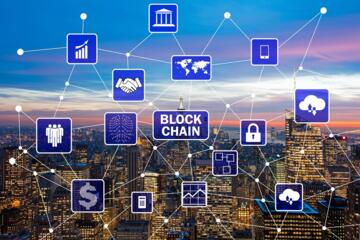
The Role of Blockchain Beyond Crypto
When most people hear "blockchain," they think of Bitcoin or Ethereum—volatile cryptocurrencies making headlines for their highs and crashes. But blockchain is not about getting rich quickly or mining coins. At its core, blockchain is a technological revolution in how we manage trust, ownership, and coordination online. As we move deeper into the digital age, traditional systems for verifying identity, tracking ownership, and enforcing agreements are struggling to keep up. They’re centralized, prone to breaches, and often opaque. Blockchain offers a radically different approach—a decentralized, transparent, and tamper-proof way to store and share information. Its potential stretches far beyond finance into supply chains, healthcare, governance, and the very infrastructure of the future Internet. Understanding blockchain beyond crypto is not just about learning a technology—it's about understanding the foundation of the next-generation digital society.
The Future of the Internet

Digital Privacy in a Hyperconnected World
In an era where nearly every action—from unlocking your phone to walking past a surveillance camera—leaves a digital trace, the notion of privacy is being redefined. We live in a hyperconnected world, where smartphones, smart homes, wearable devices, social platforms, and algorithms continuously collect, analyze, and monetize our personal data. While this connectivity enables convenience and personalization, it also comes at a cost: our digital privacy is under constant pressure.
The Future of the Internet