Internet of Things: A Connected Everything

3 min read

1

Imagine your fridge texting you when the milk runs low, your watch alerting your doctor before you feel sick, and your car booking its own service appointment. This isn’t sci-fi—it’s the Internet of Things (IoT) in action. From smart thermostats to industrial sensors, billions of connected devices now silently exchange data, helping us optimize everything from personal health to city traffic.

The IoT represents one of the most transformative trends of our era. It’s not just adding Wi-Fi to objects—it’s creating a digital nervous system for the physical world. As more devices come online and 5G accelerates connectivity, IoT is becoming the backbone of smart cities, autonomous systems, and real-time decision-making. Understanding this shift is crucial—not only for technologists, but for anyone navigating the future of work, privacy, and daily life.

🔧 What Is the Internet of Things?

The Internet of Things is a network of physical objects—“things”—embedded with sensors, software, and connectivity that allow them to collect and exchange data.

Common examples include:

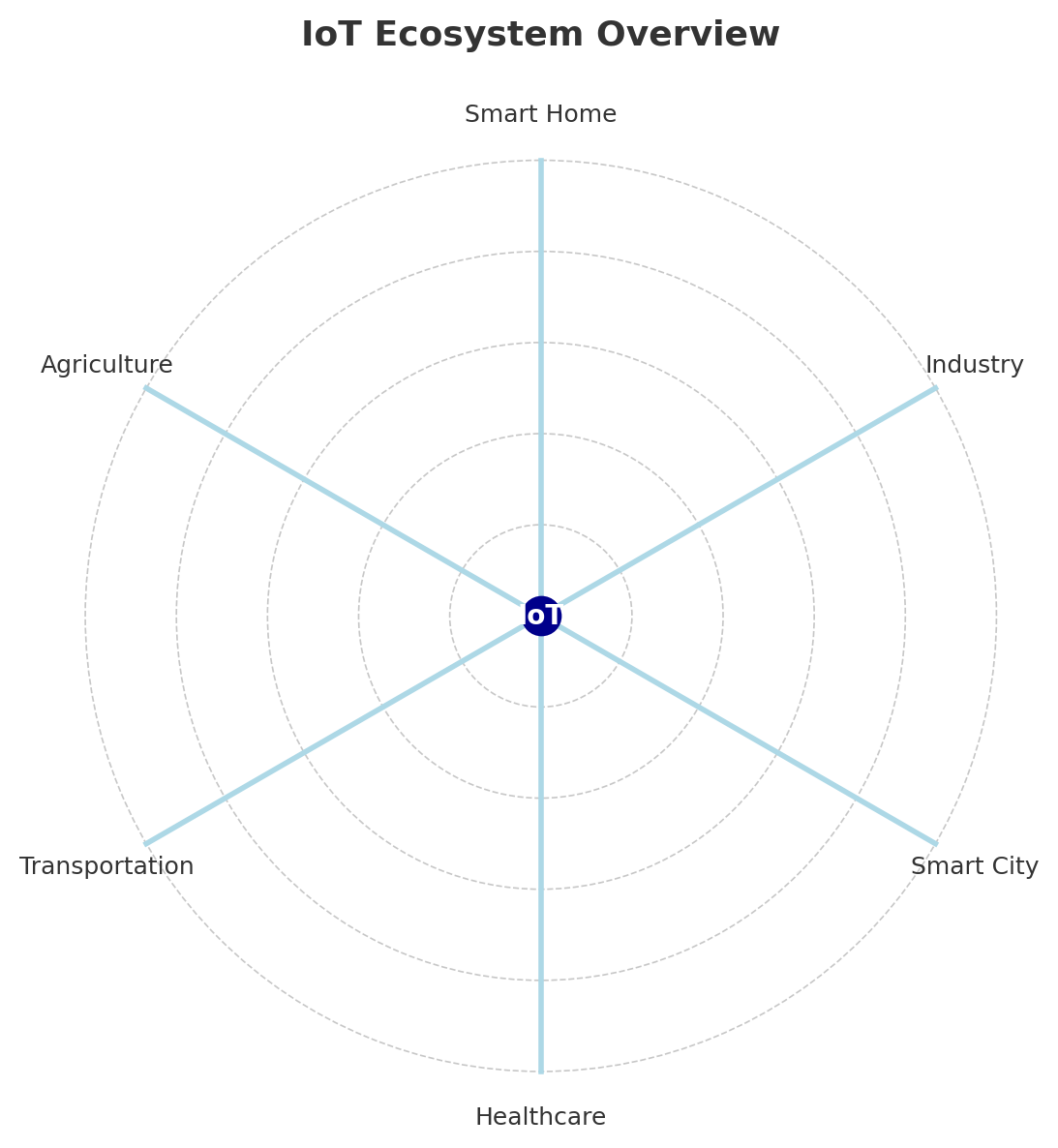
  • Smart home devices (lights, locks, speakers)

  • Wearables (fitness trackers, smartwatches)

  • Industrial IoT (machines, pipelines, sensors)

  • Healthcare IoT (remote monitoring, smart pills)

  • Agritech (soil sensors, automated irrigation)

These devices don’t just sense the world—they often respond to it autonomously.

📈 Growth & Trends in IoT

As of 2025, experts predict over 30 billion IoT devices will be online—more than triple the global population. Several key trends are driving this growth:

  • 5G & edge computing: Faster, lower-latency connections for real-time responses

  • AI at the edge: Devices process data locally, not just in the cloud

  • Energy-efficient chips: Making small, cheap, always-on sensors possible

  • Interoperability: Open standards to help devices “speak the same language”

  • Cybersecurity-by-design: Securing billions of endpoints from attacks
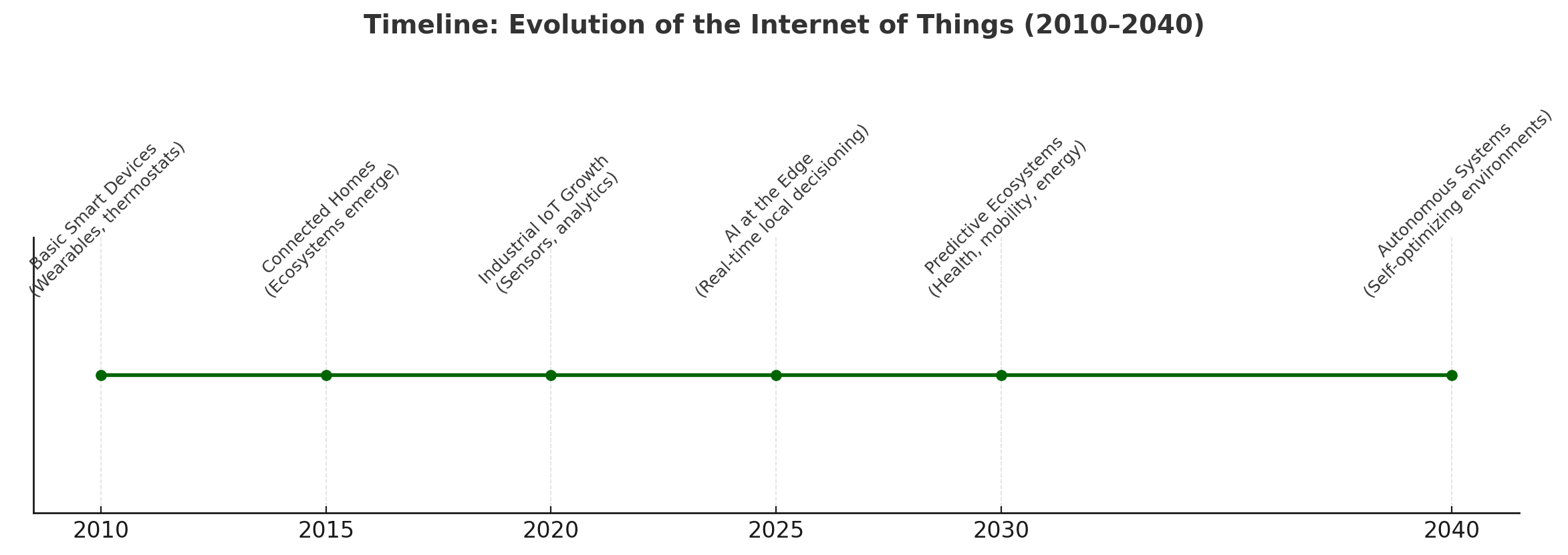
⏳ A Glimpse into the Future: What IoT Enables

The most exciting part of IoT isn’t what exists today—but what’s coming:

  • Smart cities will adapt traffic flow based on real-time conditions.

  • Healthcare systems will predict emergencies before symptoms surface.

  • Factories will maintain themselves, reducing waste and downtime.

  • Agricultural systems will water each plant based on soil feedback.

  • Home devices will integrate seamlessly into daily routines—no prompts needed.

IoT moves us toward an era where the environment doesn’t just respond to our needs—it anticipates them.
đŸ§Ÿ Conclusion: The Quiet Tech Revolution

The Internet of Things isn’t loud like social media or glamorous like AI art—but it’s silently transforming everything. It’s the invisible layer that makes spaces intelligent, systems efficient, and experiences seamless. As billions more devices come online, IoT will define the next phase of the Internet—one where objects speak, anticipate, and collaborate on our behalf.

Learning to understand—and shape—this ecosystem is essential for everyone, not just engineers. Because in the future, everything connected means everything changed.


Latest Articles

Digital Privacy in a Hyperconnected World

In an era where nearly every action—from unlocking your phone to walking past a surveillance camera—leaves a digital trace, the notion of privacy is being redefined. We live in a hyperconnected world, where smartphones, smart homes, wearable devices, social platforms, and algorithms continuously collect, analyze, and monetize our personal data. While this connectivity enables convenience and personalization, it also comes at a cost: our digital privacy is under constant pressure.

The Future of the Internet

Read » 0

How Decentralization Will Reshape the Internet

Decentralization is reshaping the internet by shifting control from platforms to users and open protocols. This expert article explains how decentralization will change infrastructure, data ownership, identity, trust, and governance online. With real examples from blockchain platforms, decentralized exchanges, and distributed storage networks, it breaks down benefits, trade-offs, and practical steps for adopting decentralized systems realistically—without hype or ideology.

The Future of the Internet

Read » 0

Internet of Things: A Connected Everything

Imagine your fridge texting you when the milk runs low, your watch alerting your doctor before you feel sick, and your car booking its own service appointment. This isn’t sci-fi—it’s the Internet of Things (IoT) in action. From smart thermostats to industrial sensors, billions of connected devices now silently exchange data, helping us optimize everything from personal health to city traffic. The IoT represents one of the most transformative trends of our era. It’s not just adding Wi-Fi to objects—it’s creating a digital nervous system for the physical world. As more devices come online and 5G accelerates connectivity, IoT is becoming the backbone of smart cities, autonomous systems, and real-time decision-making. Understanding this shift is crucial—not only for technologists, but for anyone navigating the future of work, privacy, and daily life.

The Future of the Internet

Read » 1

The Role of Blockchain Beyond Crypto

When most people hear "blockchain," they think of Bitcoin or Ethereum—volatile cryptocurrencies making headlines for their highs and crashes. But blockchain is not about getting rich quickly or mining coins. At its core, blockchain is a technological revolution in how we manage trust, ownership, and coordination online. As we move deeper into the digital age, traditional systems for verifying identity, tracking ownership, and enforcing agreements are struggling to keep up. They’re centralized, prone to breaches, and often opaque. Blockchain offers a radically different approach—a decentralized, transparent, and tamper-proof way to store and share information. Its potential stretches far beyond finance into supply chains, healthcare, governance, and the very infrastructure of the future Internet. Understanding blockchain beyond crypto is not just about learning a technology—it's about understanding the foundation of the next-generation digital society.

The Future of the Internet

Read » 0

Intelligent Content Discovery Explained

Intelligent content discovery uses AI, behavioral data, and contextual signals to help users find relevant content in an overcrowded digital world. This expert article explains how intelligent discovery works, why traditional keyword-based models fail, and how platforms and creators can design content for better visibility and engagement. With real examples from YouTube, Netflix, and modern search systems, it provides practical strategies for building discovery systems that prioritize relevance, trust, and long-term value.

The Future of the Internet

Read » 0

From Web2 to Web3: What Changes for Users

The transition from Web2 to Web3 is changing how users interact with the internet, shifting power from platforms to individuals. This expert guide explains what actually changes for users, including ownership, identity, trust, payments, and governance. With real examples from platforms like MetaMask, Uniswap, OpenSea, and stablecoin ecosystems, the article breaks down benefits, risks, and practical steps for navigating Web3 safely and realistically—without hype or ideology.

The Future of the Internet

Read » 0