Summary
Personalized learning paths powered by AI are transforming how people acquire skills, progress through education, and stay relevant in fast-changing job markets. Instead of one-size-fits-all curricula, AI-driven systems adapt content, pace, and assessment to each learner’s goals and behavior. This article explains how AI personalization works, where institutions fail, and what actually delivers measurable learning outcomes.
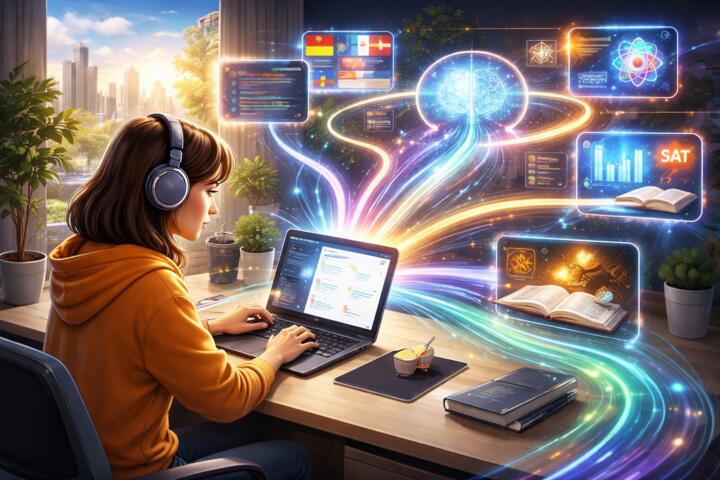
Overview: What Personalized Learning with AI Really Means
Personalized learning is not about recommending random videos or letting students “learn at their own pace.” AI-powered personalization uses data, behavioral signals, and predictive models to continuously adjust the learning journey for each individual.
In practice, this means:
-
different learners see different content,
-
assessments adapt in difficulty and format,
-
feedback arrives when it is most effective,
-
learning paths evolve based on performance and goals.
According to research cited by the OECD, adaptive learning systems can improve learning efficiency by 20–30% compared to static curricula when implemented correctly.
From Static Curricula to Adaptive Learning Systems
Traditional education assumes learners progress at the same speed and in the same order. AI-powered learning paths replace this assumption with continuous optimization.
Key data signals used by AI systems include:
-
time spent on tasks,
-
error patterns,
-
assessment results,
-
engagement drops,
-
preferred learning formats.
Modern platforms use this data to predict where a learner will struggle and intervene early.
Pain Points: Why Personalization Often Fails
1. Confusing Personalization with Content Recommendation
Many platforms only recommend the next lesson based on completion history.
Why it matters:
True personalization requires skill modeling, not content queues.
Consequence:
Learners consume more content but learn less.
2. Over-Reliance on Algorithms Without Pedagogy
AI models trained without educational design amplify noise.
Real situation:
Students are pushed ahead too fast or trapped in remedial loops.
3. Lack of Clear Learning Objectives
AI cannot optimize what is not defined.
Without explicit skill frameworks, personalization becomes guesswork.
4. Data Silos Across Learning Systems
Learning data is often fragmented across LMS, assessments, and HR systems.
This prevents holistic learner modeling.
5. Ignoring Trust and Transparency
Learners disengage when they do not understand why the system makes decisions.
Solutions and Recommendations With Concrete Practice
Define Skills, Not Just Courses
What to do:
Build learning paths around explicit skill graphs.
Why it works:
AI can only personalize against measurable competencies.
In practice:
Platforms like Coursera structure content around job-relevant skills instead of linear courses.
Result:
Clear progression visibility and faster skill acquisition.
Use Adaptive Assessment as the Core Engine
What to do:
Continuously assess mastery using adaptive quizzes and simulations.
Why it works:
Assessment data is more predictive than content completion.
Tools:
-
mastery-based engines from Knewton
-
adaptive testing frameworks used in professional certification platforms
Combine AI Recommendations With Human Oversight
What to do:
Allow instructors or mentors to override or adjust AI-generated paths.
Why it works:
Human judgment corrects edge cases and builds trust.
Integrate Learning Analytics Across Systems
What to do:
Unify LMS, assessment, and engagement data.
How it looks in practice:
Dashboards built using Microsoft Power BI or Google Cloud Analytics.
Result:
Early risk detection and targeted interventions.
Personalize Format, Not Just Content
What to do:
Adapt delivery modes (video, text, simulation, projects).
Why it works:
Learning preference impacts retention more than content order.
Mini-Case Examples
Case 1: Corporate Reskilling Program
Company context:
Global enterprise retraining mid-career professionals.
Problem:
Low completion rates in standard e-learning programs.
Solution:
AI-driven learning paths adjusting difficulty, pacing, and format.
Result:
-
28% higher completion rates
-
faster time-to-skill certification
Case 2: University Hybrid Program
Context:
Large public university offering online degrees.
What changed:
-
skill-based learning paths
-
adaptive assessments
-
predictive dropout alerts
Outcome:
Improved retention and higher student satisfaction scores.
Comparison Table: Traditional vs. AI-Personalized Learning
| Dimension | Traditional Learning | AI-Personalized Learning |
|---|---|---|
| Pace | Fixed | Adaptive |
| Content order | Linear | Dynamic |
| Assessment | Periodic | Continuous |
| Feedback | Delayed | Real-time |
| Dropout prevention | Reactive | Predictive |
Common Mistakes (and How to Avoid Them)
Mistake: Letting AI define goals
Fix: Define learning outcomes first
Mistake: Treating personalization as automation
Fix: Combine AI with pedagogy
Mistake: Ignoring explainability
Fix: Show learners why paths change
Mistake: Measuring success by content consumed
Fix: Measure skill mastery
FAQ
Q1: Is AI personalization suitable for all learners?
Yes, but models must be calibrated for different experience levels.
Q2: Does personalization reduce academic rigor?
No. When designed correctly, it increases mastery standards.
Q3: What data is required for AI learning paths?
Engagement metrics, assessment results, and skill frameworks.
Q4: Can AI replace instructors?
No. AI augments instruction, it does not replace educators.
Q5: How fast can personalized systems show results?
Early improvements often appear within one academic term.
Author’s Insight
Having worked with both education platforms and enterprise learning teams, the biggest misconception is that personalization is a technical problem. It is a learning design challenge supported by AI. Systems succeed when pedagogy leads and algorithms follow. The strongest results appear when learners understand and trust how their paths evolve.
Conclusion
Personalized learning paths powered by AI represent a fundamental shift from standardized education to adaptive, outcome-driven learning. Institutions that focus on skills, data integration, transparency, and human-AI collaboration will deliver better results for learners and employers alike.