The traditional classroom is under pressure. In an age of on-demand entertainment, short attention spans, and constant digital feedback, static lectures and standardized tests increasingly feel out of sync. Engagement is waning. Dropout rates are rising. Meanwhile, the global economy demands adaptive, self-driven learners.
Into this crisis enters gamification—the idea that if we borrow mechanics from games (points, levels, rewards), we can reignite curiosity, motivation, and participation in learning. The pitch is seductive: make learning feel like play, and students will come back for more.
But does it really work? Or are we simply slapping game badges onto broken systems?
🧩 What Is Gamification in Learning?
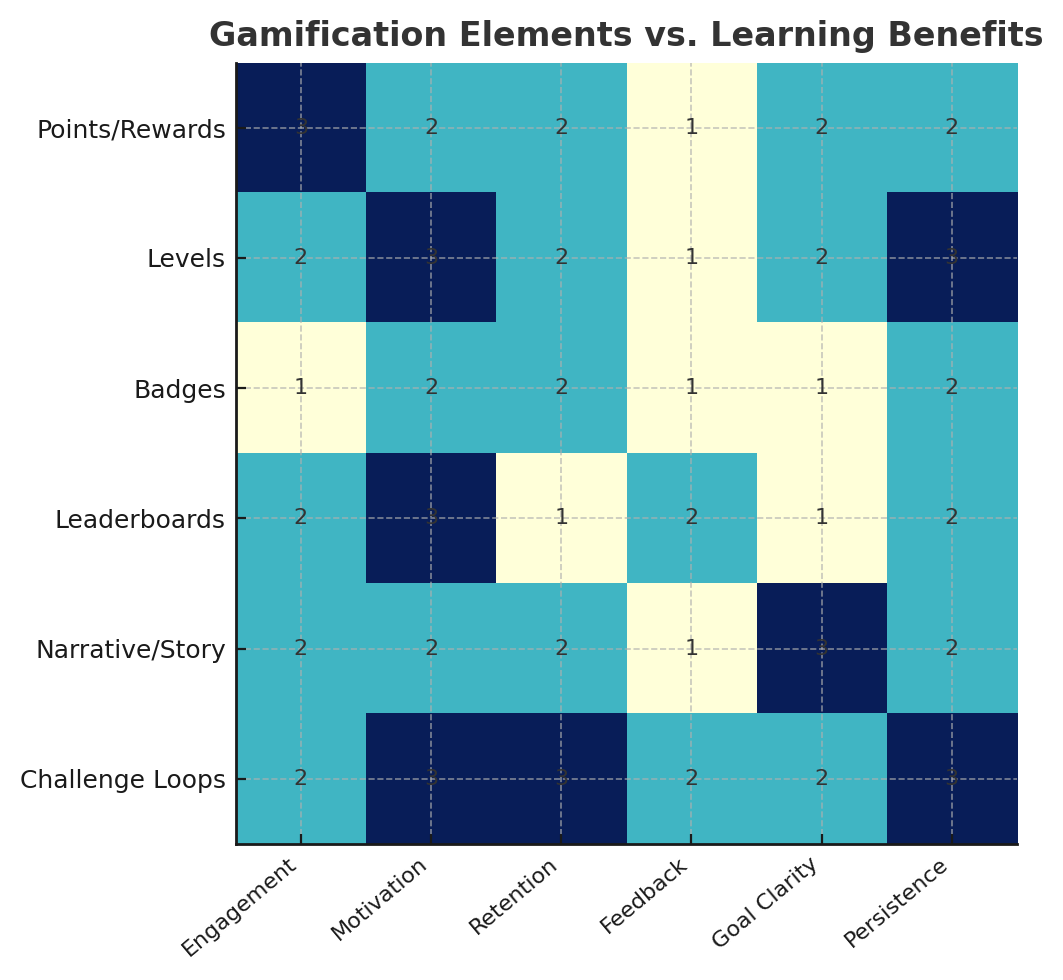
Gamification isn’t the same as educational games. Instead, it’s the application of game design elements to non-game environments, like a classroom, online course, or corporate training program. The goal? Make learning more engaging and adaptive.
Common gamification elements:
-
Points or XP for task completion
-
Levels that reflect progress
-
Badges as achievements
-
Leaderboards for friendly competition
-
Challenges, quests, and storylines for immersion
-
Immediate feedback for every action
🧠 Why Gamification Might Work: The Psychology of Play
Gamification taps into the intrinsic motivators that drive us:
| Motivator | Gamified Equivalent |
|---|---|
| Competence | Mastery through leveling up |
| Autonomy | Player choice, open pathways |
| Relatedness | Team quests, peer competition |
| Progress Feedback |
Scoreboards, visual meters |
In short, gamification offers clear goals, frequent rewards, and a sense of control—features often missing in conventional education.
🧪 Real-World Examples
-
Duolingo: Users earn XP, streaks, and gems while learning languages. The result? Over 500 million downloads and millions of daily learners.
-
Classcraft: Turns the classroom into a multiplayer RPG, where students collaborate to complete “missions” and gain powers—used in over 75 countries.
-
Khan Academy: Offers badges and energy points for course completion. Used in schools globally as a motivational overlay.
⚠️ But Not All That Glitters Is Gold
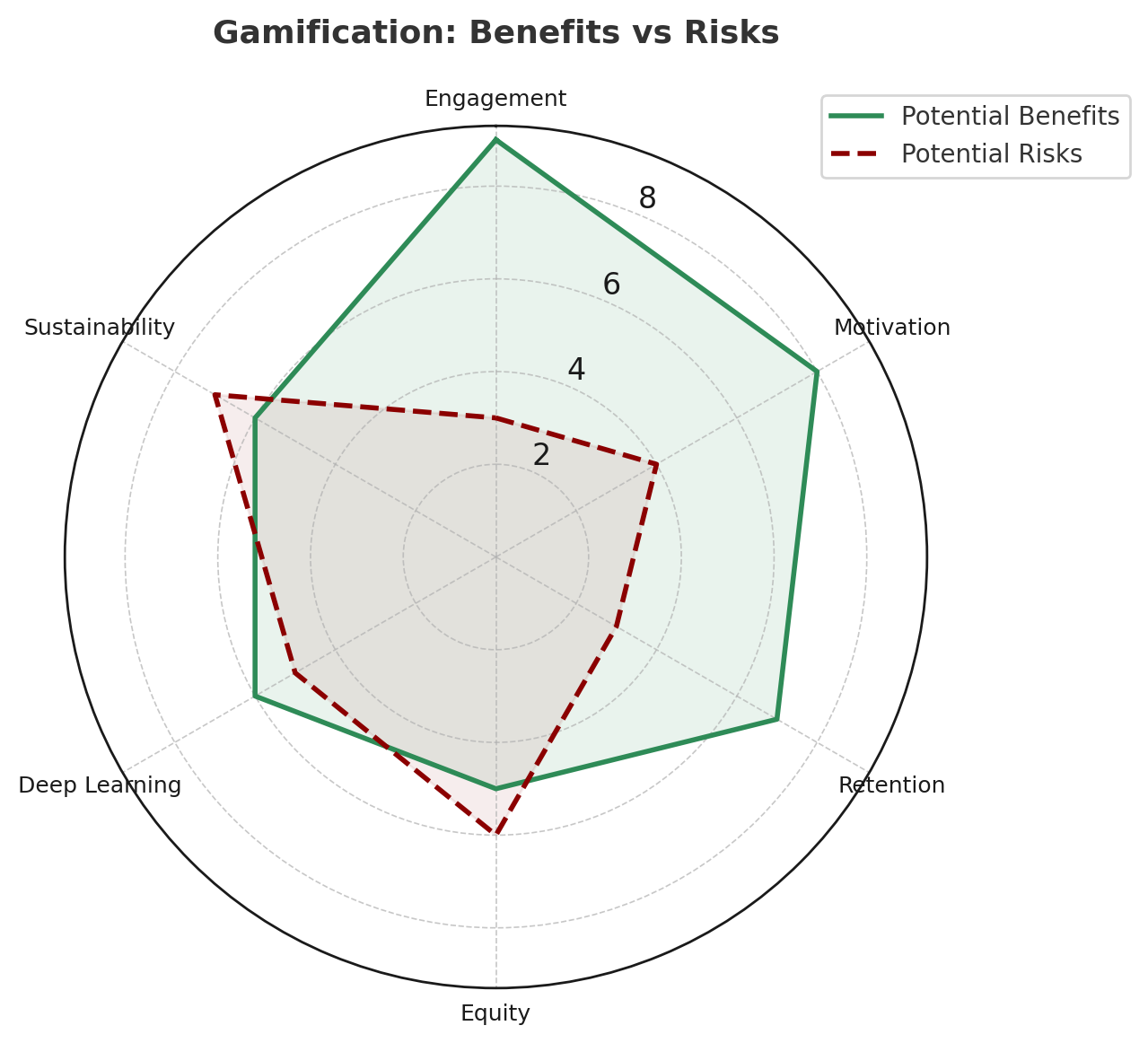
While gamification can boost short-term engagement, studies have revealed several caveats:
-
Extrinsic rewards can crowd out intrinsic motivation if learners focus on “collecting points” over understanding.
-
Poorly designed systems can gamify failure, punishing struggling students.
-
Over-competition may demotivate those consistently at the bottom of a leaderboard.
-
When “fun” becomes forced, learners may disengage entirely.
📚 What Makes Gamification Actually Work?
✅ DO:
-
Align game mechanics with learning goals, not just fun
-
Provide autonomy and meaningful choices
-
Offer constructive feedback, not just points
-
Design for inclusion, not just competition
-
Use narrative and challenge to deepen context
❌ AVOID:
-
Oversaturation with trivial rewards
-
Leaderboards without level playing fields
-
Turning learning into endless grind
🧾 Conclusion: A Powerful Tool—Not a Silver Bullet
Gamification is not a gimmick—but it’s also not a cure-all. When designed well, it can unlock motivation, make feedback visible, and help learners feel agency in their own progress. When applied carelessly, it risks turning learning into a shallow points race.
The real power of gamification lies in its ability to make education feel alive again—like something learners choose, shape, and even play.
If education is to remain relevant in the 21st century, it must borrow not just the aesthetics of games—but their insight into human behavior, decision-making, and joy.
📰 Recent Moves & New Evidence
-
A new experimental study introduced Socratique, a gamified peer-assessment platform powered by generative AI. Students in the gamified + AI group gave more feedback (and better feedback) than the control group.
-
In MOOCs at the University of the Philippines, adding gamification (badges, leaderboards, progress bars) helped increase both engagement and course satisfaction.
-
In Indian academic libraries, leaders report positive views of gamification for boosting user engagement (e.g. consultations, research use), though they cite limited staff capacity, budget, and tech as obstacles.
-
XR + AI systems are being designed with gamified architectures for remote STEM education and assessments — merging immersive experience with feedback loops.
-
On a broader scale, gamification’s market continues to rise: it's valued around $15.4 billion in 2025 and expected to expand massively by 2029.
-
More educators report using gamified techniques to encourage perseverance, growth mindset, and differentiated pacing in classrooms.
🧠 My Take: The Promise, the Danger, and the Middle Path
I believe we’re entering a second wave of gamification — one that’s more nuanced, more AI-aware, and (if we do it right) more powerful. But the risk of misuse remains real.
Here’s what I see:
-
Best case: Gamification evolves past “points & badges” toward an adaptive, narrative-rich system that blends agency, feedback, community, and meaning. Students feel they are on a journey — not just chasing tokens.
-
Worst case: It becomes a superficial veneer — badges for doing busywork, leaderboards that humiliate, rewards that substitute for real learning. That’s already happening in some places.
-
I think the sweet spot is gamification as an amplifier — not a replacement for pedagogy. Let it scaffold, not substitute; guide, not dictate.
-
Integration with AI is particularly exciting (as in the Socratique example). AI can personalize game pathways, anticipate stumbling blocks, and co-create challenges in real time. That makes gamification more scalable and responsive.
-
But there’s a red flag: we must guard against surveillance, data extraction, and monetization of student behavior under the guise of engagement metrics. We must preserve student dignity, privacy, and agency.
-
Equity must be baked in. Design must consider neurodivergent learners, those with limited tech access, and different cultures of motivation. If gamified systems favor certain learners, they’ll widen gaps rather than close them.
✅ Conclusion
Gamification in learning is far from a gimmick now — it’s maturing into a sophisticated tool with real empirical backing. But its success depends heavily on design discipline, values, and context. If done right, it can turn stale classrooms into evolving systems of growth and belonging. If done poorly, it’ll feel like a shallow game of points. I’m cautiously optimistic: I see the foundations of something powerful emerging — but it will take intentional care to get it right.