Popular Articles
Jobs That Will Exist Only Because of AI
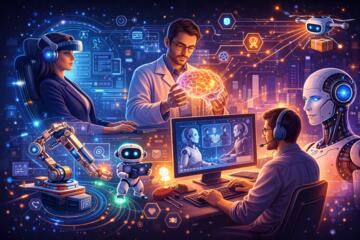
Artificial intelligence is not only automating work but creating entirely new jobs that exist solely because AI systems operate at scale. This expert article explores emerging AI-only roles such as prompt engineers, AI governance officers, model trainers, and AI operations specialists. With real examples, data, and insights from companies like OpenAI, Amazon, IBM, and Anthropic, it provides practical guidance for professionals preparing for future-proof careers in an AI-driven economy.
Careers & Skills of Tomorrow

How Remote Work Reshaped Global Hiring
In March 2020, millions of workers packed up their laptops, stepped out of offices—and never came back. What started as an emergency shift during a global pandemic has become a permanent transformation of how companies hire, manage, and think about talent. Remote work didn’t just change where we work. It changed who gets hired, how careers evolve, and what skills matter most in a global economy. Three years later, we're not going back. Remote work has flattened the hiring landscape, turning formerly local job markets into global talent platforms. This isn’t just a workplace trend—it’s a reimagining of how work fits into life, and how companies compete for talent across time zones, not ZIP codes.
Careers & Skills of Tomorrow

Why Everyone Should Learn Data Literacy
Every tap, click, swipe, purchase, share, and search contributes to the largest human dataset ever created. We live in a world where data is constantly generated—but rarely understood. From the news we consume to the jobs we pursue, data shapes our daily lives in subtle and profound ways. And yet, most people treat data like they once treated Latin: useful only to specialists in lab coats or finance towers. That’s a dangerous myth. In today’s economy, data literacy is not about becoming a data scientist. It’s about knowing how to ask the right questions, spot manipulation, and make better decisions—whether you're a teacher, designer, manager, or citizen. As AI and automation reshape the job market, data fluency is becoming the new reading and writing.
Careers & Skills of Tomorrow
Soft Skills That Will Matter Most in 2030: The Human Edge in an AI-Driven World
In 2030, the workforce will look radically different. With AI, automation, and digital tools transforming industries, many jobs will evolve, and others may fade away entirely. However, there is one thing that machines will never replicate: the human touch. While technical skills will remain critical, soft skills—those less tangible, more interpersonal abilities—will define the future of work. These are the qualities that enable us to connect, collaborate, think critically, and lead with empathy. In a world where machines perform more of the transactional and routine tasks, humans will be expected to contribute value in ways that technology cannot. This shift will require us to hone a set of unique, essential skills that will be the hallmark of successful professionals in 2030. Let’s take a closer look at the soft skills that will matter most in the coming decade and explore why they’ll be the key to thriving in an AI-enhanced world.
Careers & Skills of Tomorrow

Essential Skills for the AI Age: Thriving in a World That Thinks
We are living through a quiet revolution. Unlike the industrial booms of the past, today’s transformation doesn’t roar with machines or smoke—it hums through algorithms, speaks in code, and learns silently in the background. Artificial Intelligence isn’t coming for your job—it’s coming with your job. And that makes this moment not one of panic, but of potential. In the AI age, the value of being human is being recalibrated. The future won’t just reward what machines can’t do—it will reward those who can work alongside machines, augmenting intelligence with creativity, ethics, and adaptability. The question isn’t, “Will AI replace me?” but “How do I become irreplaceable in a world shaped by AI?”
Careers & Skills of Tomorrow