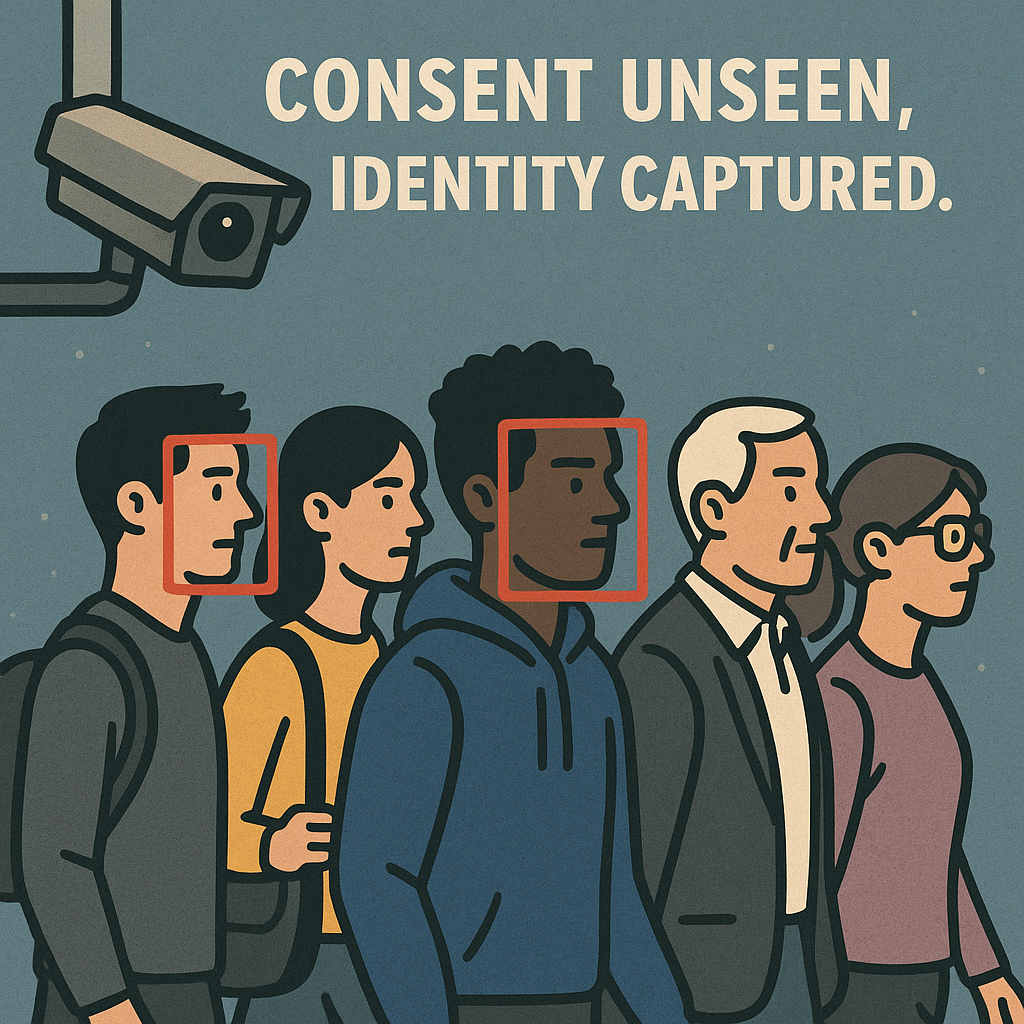
Imagine walking through a crowded city square. You don’t stop, you don’t speak, you don’t pull out your phone. Yet within seconds, hidden cameras identify your face, link it to your name, your location history, your online activity, and even your emotional state. You didn’t give consent. You might not even know it happened. This isn’t science fiction. It’s already real.
Facial recognition technology (FRT) is rapidly expanding—from unlocking phones to scanning crowds at concerts and surveilling citizens in public spaces. It promises convenience and security, but beneath the surface lies a host of ethical conflicts, legal gray zones, and serious risks to human rights. While the algorithms grow more sophisticated, the public debate struggles to keep pace.
This article explores the dark side of facial recognition—where convenience clashes with consent, where bias becomes automated, and where power and surveillance intertwine in ways that are difficult to undo.
🎯 What Is Facial Recognition—and Why It Matters
Facial recognition technology uses AI to map human faces, extract key features, and compare them to databases for identification or verification. It's used in:
-
Smartphone security
-
Police investigations
-
Airport customs
-
Retail behavior analysis
-
Government surveillance
But this convenience comes at a cost: the automation of judgment, the erosion of privacy, and the rise of algorithmic control.
⚖️ Ethical Dilemmas: More Than a Technical Problem
📍 1. Consent Without Choice
In most cases, people are not aware their faces are being scanned. Cameras in public areas, workplaces, and stores silently collect data. There's often no opt-out, no notification, no informed choice.
📍 2. Bias and Discrimination
Facial recognition systems have been shown to misidentify women, people of color, and non-binary individuals at significantly higher rates than white males. This isn't just an error—it’s a digital form of systemic bias.
Case in point: several wrongful arrests in the U.S. linked directly to flawed facial recognition matches.
Case Example:
In 2020, Robert Williams, a Black man from Detroit, was falsely arrested when FRT mistakenly matched his face to a surveillance image. He spent 30 hours in jail for a crime he didn’t commit—because the algorithm got it wrong.
📍 3. Surveillance and Chilling Effects
When people know they are constantly watched, behavior changes. Expression becomes cautious. Dissent becomes dangerous. The very fabric of democratic freedom is reshaped. Facial recognition, deployed unchecked, creates a world where silence is safe and visibility is a risk.
🔍 Comparative Legal Landscape: Who's Regulating?
🌍 Snapshot of Global Approaches:
-
EU: The proposed AI Act could ban real-time facial recognition in public spaces, except for narrowly defined uses like terrorism.
-
USA: Lacks federal regulation. Some cities like San Francisco and Boston have banned police use, while others deploy it heavily.
-
China: Embraces FRT as part of its massive surveillance infrastructure—used to monitor ethnic minorities, track behavior, and enforce social control.
-
India: Rapid expansion without clear legal safeguards. Widespread deployment in policing and citizen ID projects.
Key Question:
Where is the line between safety and surveillance? And who gets to draw it?
🤖 The Corporate Dilemma: Ethics vs. Profit
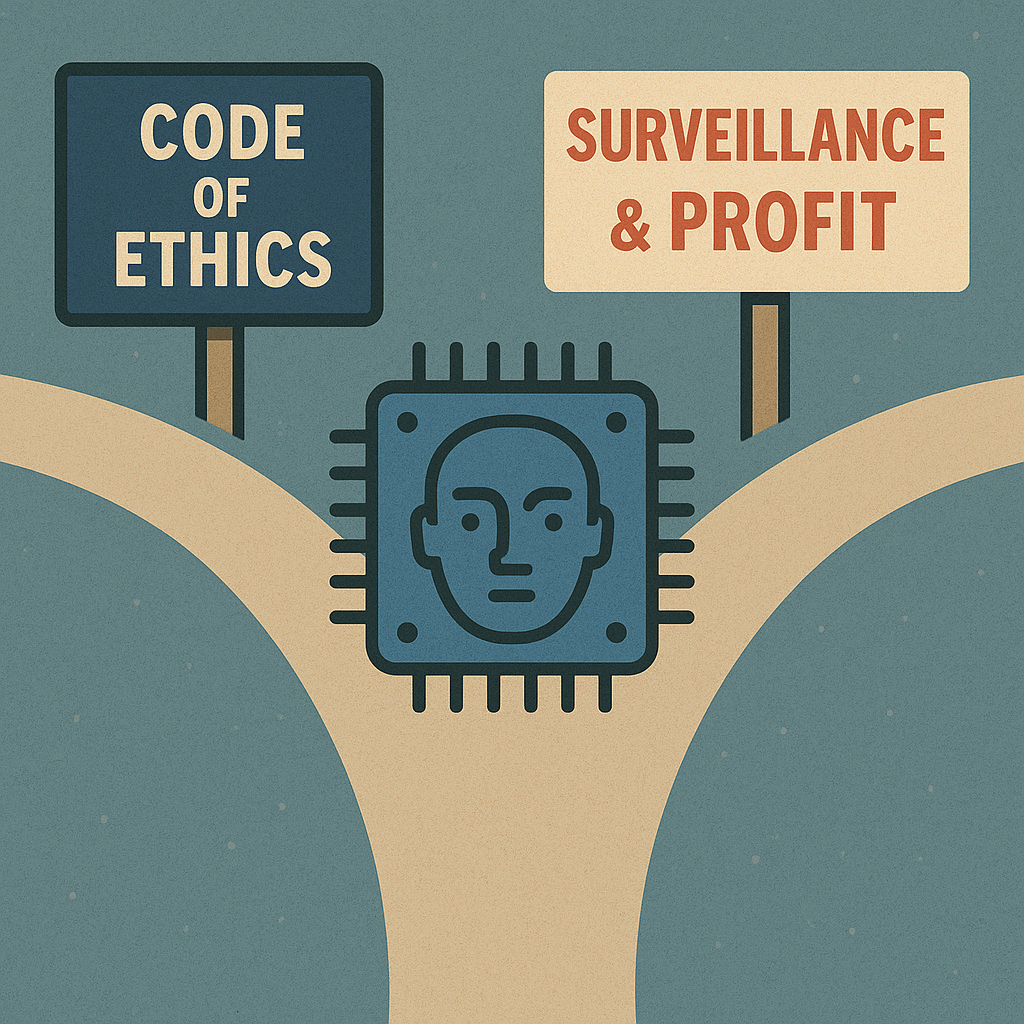
Many facial recognition systems are developed by private tech companies. Their clients include governments, law enforcement, retailers, and advertisers. These companies sit at the crossroads of innovation and responsibility, but too often, profit and speed override ethical reflection.
Some companies have responded:
-
IBM, Microsoft, and Amazon paused or restricted facial recognition sales to police.
-
Clearview AI, meanwhile, scraped billions of images from social media without consent, creating a global face search engine now used by law enforcement agencies.
🧩 Complexity, Not Clarity: Why There's No Easy Answer
Facial recognition is not inherently evil. It can help find missing persons, catch criminals, improve accessibility, and personalize services. The problem lies in how it’s used—and who it empowers.
| Good Use | Find trafficking victims, assist the disabled, unlock secure devices
| Bad Use | Monitor protests, target minorities, predict behavior without consent
The same camera that finds a lost child could be used to suppress a political dissenter.
🛡️ Possible Paths Forward
Rather than a binary yes-or-no to facial recognition, we need multi-layered, nuanced solutions:
-
Legally: Clear, enforceable laws that define boundaries, require consent, and ensure transparency.
-
Technologically: Bias audits, open datasets, and privacy-by-design development.
-
Socially: Public education and awareness campaigns to empower informed citizens.
-
Ethically: Independent oversight bodies that can evaluate high-risk AI systems.
✅ Final Thoughts: Watching the Watchers
Facial recognition is a mirror—not just of our faces, but of our values. It reflects how much we are willing to trade for convenience, how we define consent and dignity, and how we shape the future of digital power.
We must ask: Do we want a society where technology recognizes everyone, or a society where everyone is recognized as a human first—before the data, before the face, before the scan?
The tools we build today will define the freedoms of tomorrow. Let’s make sure we build them with open eyes—and not just open cameras.