Summary
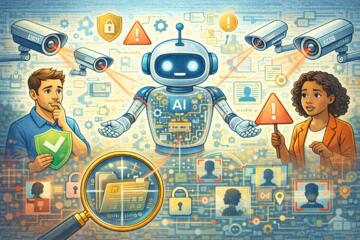
As intelligent systems increasingly make decisions that affect people’s lives, human oversight becomes a critical safeguard rather than a symbolic checkbox. This article explains why automation without meaningful human control leads to systemic risk, how effective oversight actually works in practice, and what organizations must do to balance efficiency with accountability. It is written for product leaders, engineers, compliance teams, and executives responsible for deploying AI at scale.

Overview: What Human Oversight Really Means
Human oversight is often misunderstood as “someone watching the system.” In reality, it is a design principle, not a monitoring role.
In intelligent systems—AI models, automated decision engines, predictive analytics—oversight defines:
-
Who can intervene
-
When intervention is possible
-
How responsibility is assigned
A 2023 enterprise risk survey showed that over 70% of AI-related incidents occurred in systems with nominal oversight but no real intervention authority.
Human oversight is effective only when it is designed into the system architecture, not layered on top.
Pain Points: Why Oversight Fails in Practice
1. Humans Reduced to Rubber Stamps
What goes wrong:
Humans are placed “in the loop” but lack time, context, or authority to challenge decisions.
Why it matters:
Oversight without agency creates false accountability.
Result:
When failures occur, responsibility becomes blurred.
2. Automation Bias
Reality:
People tend to trust system outputs even when they are wrong.
Studies show that operators override AI recommendations less than 15% of the time, even when clear inconsistencies are visible.
Consequence:
Human oversight exists in theory but not in behavior.
3. Oversight Without Explainability
Common failure:
Humans are expected to approve decisions they cannot explain.
Outcome:
Oversight becomes procedural rather than analytical.
4. Oversight Designed for Compliance, Not Safety
In many organizations, oversight exists only to satisfy regulators.
Problem:
Compliance-driven oversight focuses on documentation, not decision quality.
5. Cognitive Overload at Scale
As systems operate in real time, humans are asked to review:
-
Too many alerts
-
Too many edge cases
-
Too little context
Result:
Critical issues get lost in noise.
Solutions and Recommendations (With Practical Detail)
1. Define Oversight Levels Explicitly
What to do:
Differentiate between:
-
Monitoring
-
Review
-
Veto authority
Why it works:
Clear authority prevents ambiguity during incidents.
In practice:
Create decision matrices that specify when humans can override systems.
Result:
Faster, safer escalation paths.
2. Design for Human Intervention, Not Observation
Key principle:
If humans cannot intervene meaningfully, they are not providing oversight.
How it looks:
-
Pause mechanisms
-
Manual fallback modes
-
Threshold-based handoffs
Impact:
Human judgment becomes operational, not symbolic.
3. Prioritize Explainability Over Accuracy Alone
What to change:
Optimize systems to explain why a decision was made, not just what decision was made.
Tools and methods:
-
Model confidence scoring
-
Feature attribution summaries
-
Decision trace logs
Result:
Humans can challenge decisions with confidence.
4. Reduce Automation Bias Through Interface Design
What works:
Interfaces that:
-
Present alternatives
-
Show uncertainty
-
Encourage questioning
Why:
Design nudges behavior more than training.
Data point:
Teams using uncertainty indicators report 25–35% higher human intervention rates in critical cases.
5. Match Oversight Intensity to Risk
Principle:
Not all decisions require the same level of human involvement.
Approach:
-
Low risk → full automation
-
Medium risk → sampled review
-
High risk → mandatory human approval
Result:
Scalable oversight without bottlenecks.
6. Train Humans for Oversight, Not Operations
Common mistake:
Training humans to operate systems, not to challenge them.
Better approach:
-
Critical thinking drills
-
Bias recognition
-
Failure scenario simulations
Outcome:
Humans become safeguards, not operators.
Mini-Case Examples
Case 1: Financial Risk Systems
Company: JPMorgan Chase
Problem:
Automated credit decisions showed bias in edge cases.
What they did:
Introduced tiered human review for borderline decisions and improved explainability dashboards.
Result:
Reduced false rejections by 18% while maintaining automation speed.
Case 2: Autonomous Systems Oversight
Company: Tesla
Challenge:
Driver overreliance on automated driving features.
Action:
Implemented continuous human attention checks and system disengagement protocols.
Outcome:
Ongoing debate, but clear acknowledgment that full autonomy requires human responsibility.
Oversight Models: Comparison Table
| Model | Human Role | Pros | Cons |
|---|---|---|---|
| Human-in-the-loop | Approves decisions | Strong control | Slow at scale |
| Human-on-the-loop | Monitors & intervenes | Scalable | Risk of inattention |
| Human-out-of-the-loop | Post-hoc review | Fast | High risk |
The safest systems often combine multiple models depending on context.
Common Mistakes (and How to Avoid Them)
Mistake: Oversight added late
Fix: Design intervention points early
Mistake: Assuming humans will speak up
Fix: Build interfaces that invite challenge
Mistake: Treating oversight as a legal role
Fix: Give oversight operational authority
Mistake: Overloading reviewers
Fix: Filter and prioritize alerts
FAQ
Q1: Is human oversight required for all AI systems?
No. It should be proportional to risk and impact.
Q2: Does human oversight reduce efficiency?
Only if poorly designed. Smart oversight improves long-term reliability.
Q3: Can oversight be automated?
No. Automation can assist, but judgment remains human.
Q4: Who should provide oversight?
Trained personnel with real decision authority.
Q5: Is post-hoc review enough?
Not for high-impact systems affecting rights or safety.
Author’s Insight
In real-world deployments, I’ve seen that most AI failures are not technical—they are governance failures. Systems did exactly what they were designed to do, but no one had the power or clarity to stop them when context changed. Human oversight works only when humans are empowered to disagree with machines, not just observe them.
Conclusion
Human oversight is not an obstacle to intelligent systems—it is what makes them sustainable. As automation scales, the question is no longer whether humans should remain involved, but how intelligently that involvement is designed. Organizations that treat oversight as architecture, not policy, will build systems that earn trust instead of constantly repairing it.