Summary
AI-generated content is now embedded in journalism, marketing, education, and software development—but ethical clarity has not kept pace with adoption. This article explains where ethical risks emerge, why current practices fail, and how organizations can use AI content responsibly without eroding trust. It is written for product leaders, content strategists, publishers, and executives deploying generative AI at scale.
Overview: What AI-Generated Content Really Is
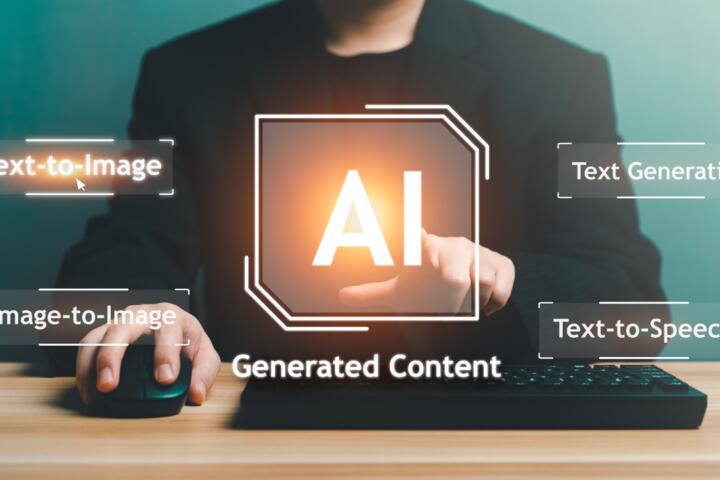
AI-generated content refers to text, images, audio, video, or code produced partially or entirely by machine-learning models. These systems do not “create” in the human sense—they predict outputs based on patterns in large datasets.
In practice, AI content now appears in:
-
News summaries
-
Marketing copy
-
Educational materials
-
Customer support responses
-
Software documentation
According to industry research, over 60% of digital content workflows now involve some form of AI assistance, often without explicit disclosure to users.
Ethical questions arise not because AI content exists, but because its origin, intent, and accountability are frequently unclear.
Pain Points: Where Ethics Break Down
1. Lack of Transparency
What goes wrong:
Users often cannot tell whether content was written by a human, an AI, or a hybrid process.
Why it matters:
Trust depends on understanding authorship and intent.
Consequence:
Audiences feel manipulated when AI involvement is later revealed.
2. Accountability Gaps
Core issue:
When AI content causes harm—misinformation, bias, plagiarism—no one clearly owns responsibility.
Real situation:
Editors blame tools. Vendors blame users. Users blame models.
Result:
Ethical responsibility dissolves.
3. Training Data Ethics
Many generative systems are trained on:
-
Public web content
-
Licensed datasets
-
User-generated material
Problem:
Creators often did not consent to their work being used.
Impact:
Growing legal and ethical tension around intellectual property and authorship.
4. Scale Amplifies Harm
AI enables content production at unprecedented scale.
Why this matters:
Mistakes that once affected dozens now affect millions.
Example:
Automated misinformation spreads faster than manual correction.
5. Human Oversight Is Often Symbolic
AI outputs are published with minimal review due to speed and cost pressures.
Outcome:
Humans become validators, not editors.
Solutions and Ethical Best Practices (With Concrete Detail)
1. Mandatory Disclosure Standards
What to do:
Clearly label AI-generated or AI-assisted content.
Why it works:
Transparency preserves trust even when automation is used.
In practice:
-
Content footnotes
-
Interface indicators
-
Policy disclosures
Result:
Audiences respond more positively to disclosed AI use than to hidden automation.
2. Assign Human Accountability Explicitly
Key principle:
Every AI-generated output must have a human owner.
How it looks:
-
Named editor or reviewer
-
Clear escalation path
-
Final approval authority
Impact:
Responsibility becomes traceable and enforceable.
3. Define Acceptable Use Boundaries
What organizations must decide:
Where AI is allowed to generate content—and where it is not.
Examples:
-
AI for drafts → acceptable
-
AI for medical advice → restricted
-
AI for legal conclusions → prohibited without review
Outcome:
Reduced ethical ambiguity.
4. Implement Bias and Accuracy Audits
What works:
Regular testing of AI outputs for:
-
Bias patterns
-
Factual drift
-
Harmful stereotypes
Tools and methods:
-
Sample-based review
-
Human red-team testing
-
Content scoring frameworks
Result:
Measurable reduction in reputational risk.
5. Respect Creator Rights in Training Data
Ethical shift:
Move from “public equals free” to consent-aware data usage.
In practice:
-
Licensed datasets
-
Opt-out mechanisms
-
Attribution systems
Long-term benefit:
Sustainable AI ecosystems instead of legal backlash.
6. Design AI to Support, Not Replace, Judgment
Best practice:
Use AI to:
-
Generate options
-
Summarize information
-
Assist creativity
Not to:
-
Replace editorial decisions
-
Eliminate critical review
Why:
Ethical quality degrades when judgment is automated.
Mini-Case Examples
Case 1: News Content and Transparency
Organization: Associated Press
Problem:
Need for speed in financial reporting without compromising trust.
What they did:
Used AI to generate earnings summaries while maintaining human editorial oversight and disclosure.
Result:
Faster publication with no measurable drop in reader trust.
Case 2: Generative AI in Creative Platforms
Company: Adobe
Challenge:
Balancing generative tools with creator rights.
Action:
Trained models on licensed content and introduced usage disclosures.
Outcome:
Stronger acceptance among professional creators compared to opaque competitors.
Ethical Approaches Comparison
| Approach | Pros | Cons |
|---|---|---|
| Full automation | Fast, cheap | High ethical risk |
| Human-led, AI-assisted | Balanced | Higher cost |
| Undisclosed AI use | Short-term gains | Long-term trust loss |
| Transparent hybrid model | Sustainable | Requires governance |
Ethics scale best when humans retain final authority.
Common Mistakes (And How to Avoid Them)
Mistake: Treating AI output as neutral
Fix: Assume bias unless proven otherwise
Mistake: Hiding AI involvement
Fix: Normalize disclosure
Mistake: No editorial ownership
Fix: Assign accountable humans
Mistake: Optimizing only for volume
Fix: Measure trust, not just reach
FAQ
Q1: Is AI-generated content unethical by default?
No. Ethics depend on transparency, intent, and accountability.
Q2: Should all AI content be labeled?
Yes, especially when users may assume human authorship.
Q3: Who is responsible for harmful AI output?
The organization deploying it—not the model.
Q4: Can AI replace human creativity ethically?
No. It can assist, not substitute judgment and intent.
Q5: Will regulation solve these issues?
Partially. Ethical design must go beyond compliance.
Author’s Insight
In real deployments, the biggest ethical failures I’ve seen were not caused by malicious intent, but by silence—no disclosure, no ownership, no accountability. AI-generated content becomes dangerous not when it exists, but when organizations pretend it is something it is not. Ethics, in this space, is largely about honesty.
Conclusion
The ethics of AI-generated content will define whether generative technology earns trust or accelerates skepticism. Organizations that prioritize transparency, accountability, and human judgment will build sustainable systems. Those that chase scale without responsibility will face backlash—legal, cultural, and reputational.