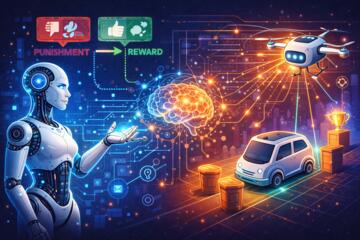
In recent years, artificial intelligence has shifted from a backstage tool to a frontline collaborator. Nowhere is this more visible than in the rise of generative AI—systems like ChatGPT, DALL·E, and Midjourney that don’t just analyze data, but produce original text, images, code, music, and more. What once took a team of designers or copywriters can now emerge in seconds from a well-crafted prompt.
This revolution isn’t just about faster outputs. It’s about changing the way we think, work, and solve problems. Generative AI redefines who can create, what can be automated, and how value is generated. As it moves into classrooms, offices, hospitals, and homes, the impact of generative AI and automation will reshape society as profoundly as the Internet did.
Understanding how it works—and where it’s going—is essential for anyone who wants to thrive in the coming decade.
🤖 Introduction: The Machines Are Not Just Learning—They’re Creating
In recent years, artificial intelligence has shifted from a backstage tool to a frontline collaborator. Nowhere is this more visible than in the rise of generative AI—systems like ChatGPT, DALL·E, and Midjourney that don’t just analyze data, but produce original text, images, code, music, and more. What once took a team of designers or copywriters can now emerge in seconds from a well-crafted prompt.
This revolution isn’t just about faster outputs. It’s about changing the way we think, work, and solve problems. Generative AI redefines who can create, what can be automated, and how value is generated. As it moves into classrooms, offices, hospitals, and homes, the impact of generative AI and automation will reshape society as profoundly as the Internet did.
Understanding how it works—and where it’s going—is essential for anyone who wants to thrive in the coming decade.
🧠 What Is Generative AI?
Generative AI refers to systems that use machine learning models—often large neural networks—to generate new content based on patterns in data. Unlike traditional AI that classifies or predicts, generative AI can:
-
Write essays and articles (e.g., ChatGPT)
-
Create art and illustrations (e.g., DALL·E, Midjourney)
-
Generate code (e.g., GitHub Copilot)
-
Compose music, simulate voices, build games, and more
These models are often trained on billions of words, images, or audio files, and use this knowledge to respond in ways that are surprisingly coherent—and sometimes eerily human.
🌍 Where Is Generative AI Making an Impact?
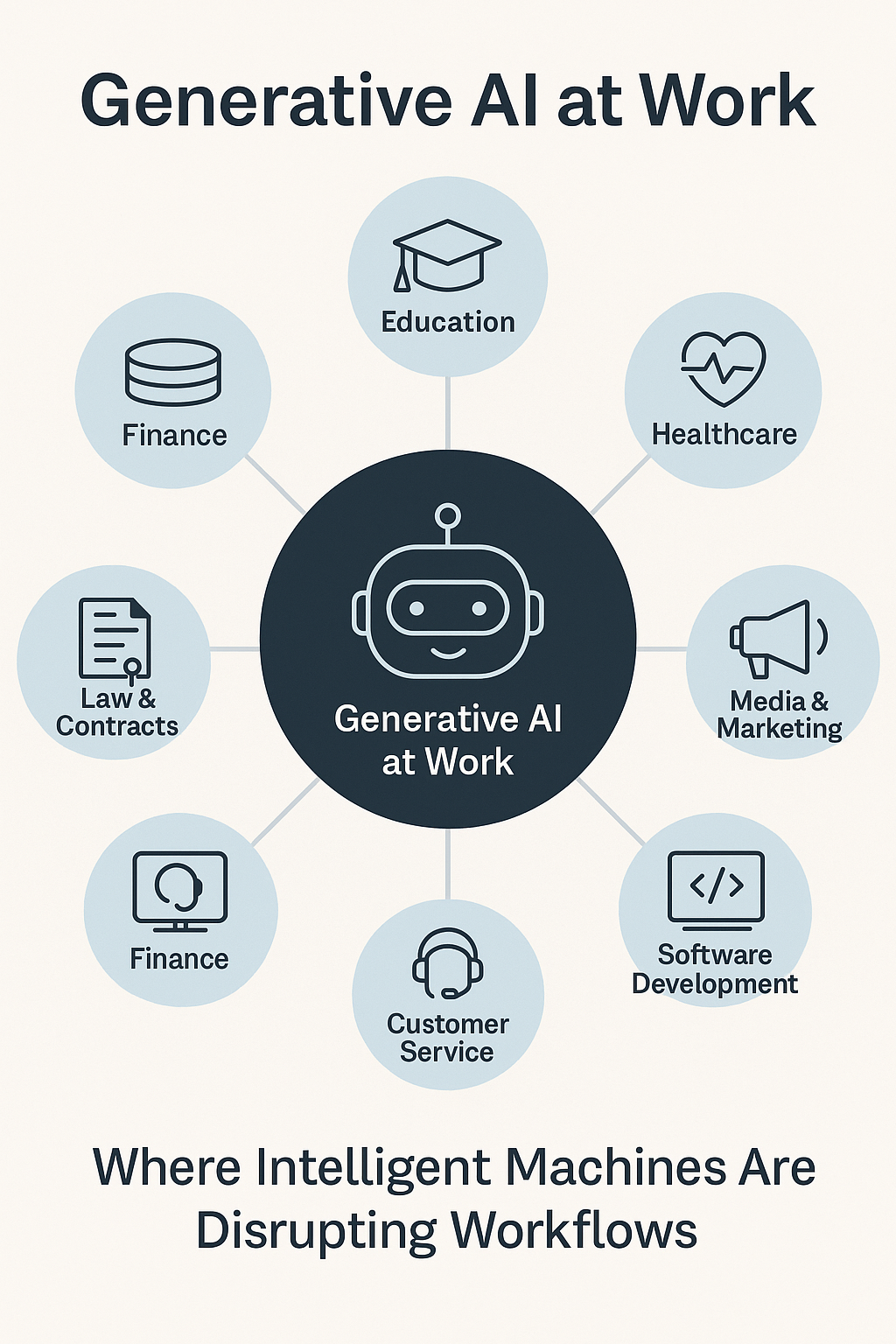
Generative AI isn’t just a novelty. It’s already transforming key sectors:
-
Education: Personalized tutoring, feedback, and curriculum design
-
Healthcare: Generating clinical summaries, helping diagnose rare diseases
-
Media & Marketing: Automated ad copy, blog posts, and video scripts
-
Software Development: Assisting coders with real-time code generation
-
Customer Service: AI-powered chatbots and email assistants
-
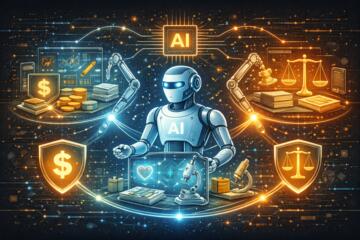
Law & Contracts: Drafting legal documents and reviewing case law
-
Finance: Summarizing reports, detecting fraud patterns in text
📈 Adoption Is Accelerating — But Not Without Risk
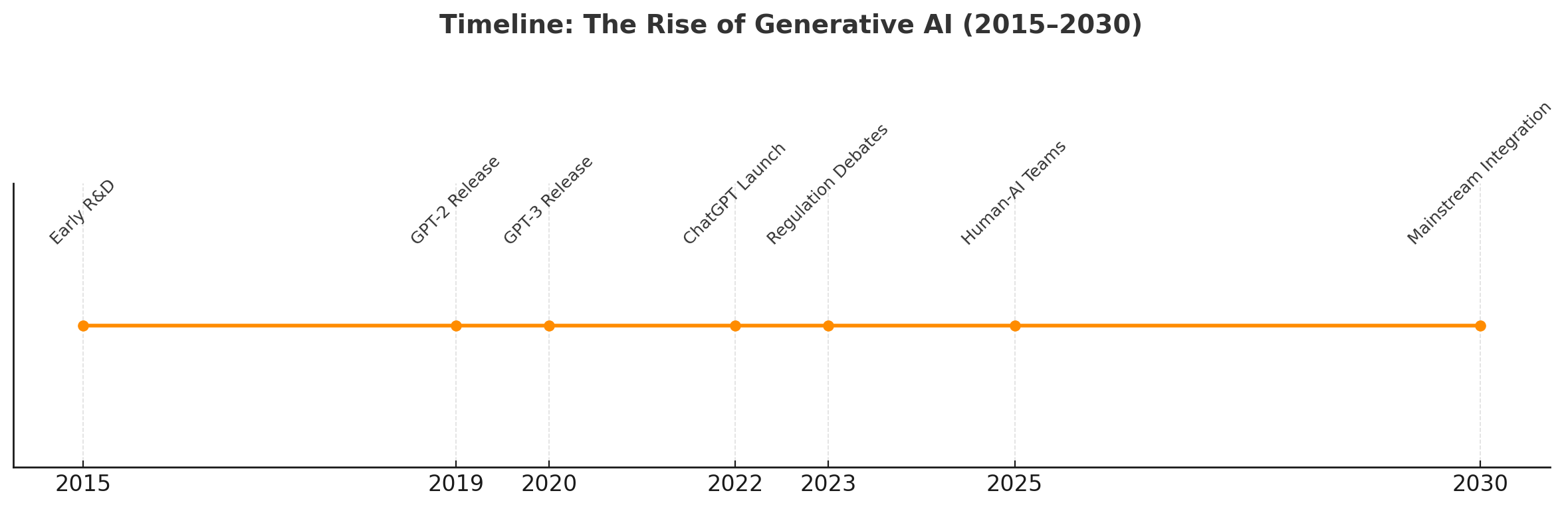
Generative AI adoption is growing at an unprecedented rate. Within just months of launch, tools like ChatGPT reached hundreds of millions of users. Businesses are integrating it into their workflows; schools are debating its role in learning; governments are racing to regulate it.
But this speed brings complexity:
-
Bias: Models reflect the data they're trained on—often replicating human prejudice.
-
Misinformation: AI can produce text that sounds right but is factually wrong.
-
Job Displacement: Creative, administrative, and entry-level roles may be partially automated.
-
Legal grey zones: Who owns AI-generated content? Who is liable for its mistakes?
Generative AI doesn't just raise technical questions—it challenges our ethical, legal, and cultural frameworks.
🧾 Conclusion: Co-Creating the Future
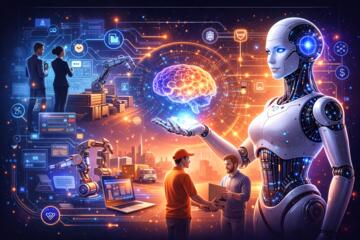
Generative AI isn’t just a technological leap—it’s a societal shift. It empowers individuals, disrupts industries, and challenges our assumptions about creativity, labor, and even authorship. But as with any powerful tool, the outcome depends on how we choose to use it.
Will we embrace AI as a partner that augments human potential? Or will we automate without accountability? The future is unwritten—but with generative AI, we might just get help writing it.