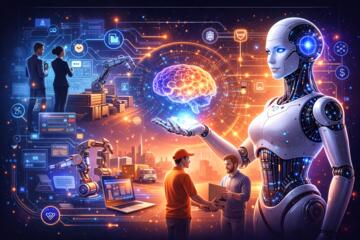
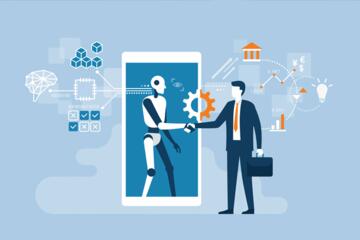
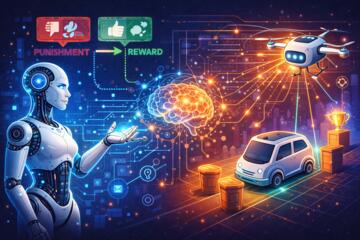
Artificial intelligence was once the domain of PhDs and data scientists, built on layers of complex code, math, and infrastructure. But over the past few years, a profound shift has occurred: AI is becoming accessible to everyone, even those with zero programming knowledge.
This revolution is powered by no-code AI platforms—tools that allow users to build, train, and deploy machine learning models through simple drag-and-drop interfaces or guided workflows. The implications are enormous: marketing teams can predict churn, HR departments can scan resumes for fit, and teachers can personalize learning—all without writing a single line of code.
The democratization of AI is not just a trend. It’s a tectonic shift in how businesses operate, how individuals innovate, and how organizations compete.
🧩 What Are No-Code AI Platforms?
No-code AI platforms are software tools that let users interact with machine learning workflows through graphical user interfaces (GUIs) rather than programming environments. Most platforms include:
-
Data ingestion and cleaning tools
-
Model selection via templates (classification, regression, clustering)
-
Evaluation dashboards with visualized metrics
-
One-click deployment to apps, dashboards, or APIs
Examples include:
-
Google AutoML
-
Microsoft Lobe
-
Peltarion
-
DataRobot
-
Obviously.AI
🌍 Real-World Applications
-
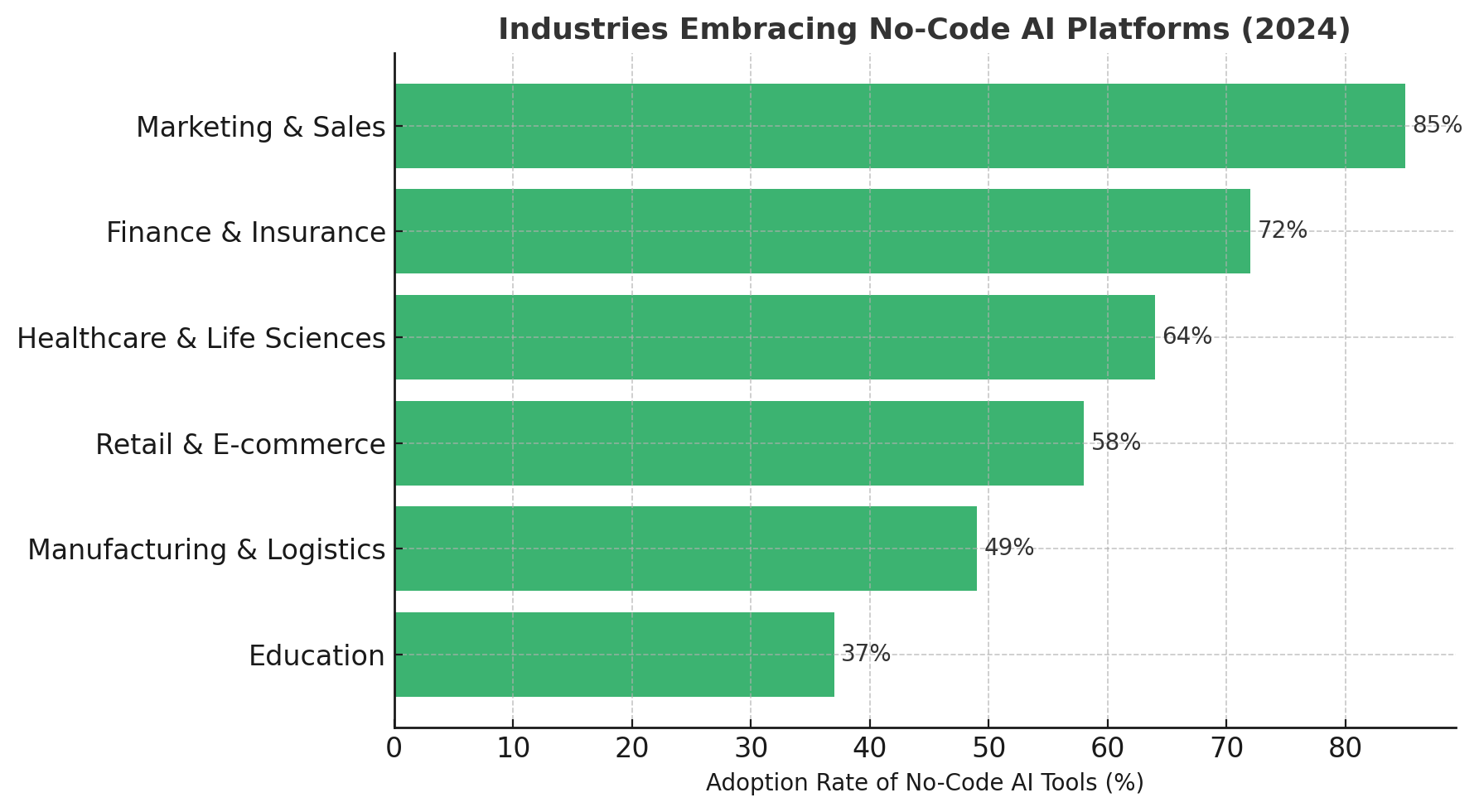
Marketing: Create customer segmentation models in hours, not weeks
-
Finance: Automate loan approvals or credit scoring without developers
-
Healthcare: Predict patient readmission risk using historical EMR data
-
Retail: Forecast inventory and personalize recommendations
-
Education: Tailor lesson plans based on learning data analytics
These use cases were once cost-prohibitive and required large data science teams. Now, a product manager or educator can launch them solo.
⚖️ Ethical & Practical Dilemmas
🧠 AI Without Understanding
When anyone can build a model, what happens when they don’t understand it? Risks include:
-
Misinterpreting outputs
-
Using biased datasets
-
Failing to detect data leakage or model drift
🔒 Data Privacy
No-code tools often rely on cloud-based services. How is sensitive customer data handled? Does the user even know where it goes?
💼 Displacing or Empowering Experts?
Some fear these tools will eliminate data scientist roles. But more often, they augment experts, freeing them to focus on complex modeling while enabling others to solve basic use cases.
🚀 What’s Next?
Expect three major evolutions:
-
AutoML + Explainability: More platforms will integrate explainable AI tools to help users understand model decisions
-
Integration Ecosystems: Seamless connectivity with CRMs, ERP, LMS, and data warehouses
-
Hybrid Workflows: No-code tools offering a “pro switch” for code-savvy users to fine-tune or extend models
Eventually, AI will become as common a business tool as spreadsheets—and no-code is its gateway.
🧾 Conclusion: AI for All, But Not Without Responsibility
The rise of no-code AI platforms is a landmark moment. It levels the playing field, unlocking creativity, innovation, and efficiency for millions who were previously excluded. But with power comes responsibility. Educating users, ensuring transparency, and building guardrails into the tools themselves will determine whether this democratization of AI leads to empowerment—or chaos.
📰 Recent News & Developments (2025) + Commentary
Here are some of the most noteworthy updates in this space lately, and my take on where things are headed:
🔍 Recent Highlights
-
Anthropic’s Claude supports no-code app building via chat — Claude’s “Artifacts” feature allows users to build interactive AI applications and share them without writing code or APIs.
-
CrowdStrike launched Charlotte AI AgentWorks, a no-code platform where security teams can build and orchestrate AI agents, with embedded governance features.
-
Webflow enters AI-driven app/web development with a conversational assistant that can generate React components directly on the design canvas.
-
Vibecode (vibe-coding startup) raised $9M — their iOS app lets users build apps via natural language prompts without traditional coding.
-
Academic work: AIAP no-code workflow builder — a new research prototype combining natural language with visual modular workflows, showing tasks can be decomposed behind the scenes so non-experts can build services.
-
Sola Security raised $35M to push no-code AI tools in cybersecurity, enabling security teams to build identity, compliance, or cloud risk tools without code.
-
IDC / Salesforce: Low-code / no-code tools are a strategic priority — Salesforce was named a leader in IDC’s 2025 low-code/no-code vendor evaluation.
🧠 My Opinion & Where I Think Things Are Going (as Author)
I believe we are in the early stages of a massive structural shift in how technology is built and consumed. A few thoughts, from my perspective:
-
The trend is overwhelmingly positive: more people can bring ideas to life, innovation will no longer bottleneck at “need to hire developers,” and organizations can iterate faster.
-
But with great power comes great risk: as models get packaged and distributed by nonexperts, governance, auditability, and ethical guardrails become existential concerns.
-
I expect a polarization: simple use cases (marketing segmentation, basic forecasting, document classification) will move fully to no-code; the frontier problems (complex optimizations, novel architectures, AI safety) will still require deep expertise.
-
The companies that thrive will be those that balance empowerment with guardrails: giving non-technical users freedom, but embedding structure (versioning, approval checks, bias audits) so things don’t go off the rails.
-
I think “vibe coding” (giving prompts and iteratively refining rather than writing code) is going to get more common, but it will also bring a backlash. As more AI-generated systems roll out, we’ll see bugs, hallucinations, security lapses—and that will force users to demand visibility and oversight.
-
In the medium term, I’m bullish that no-code and pro-code will coexist: non-technical users build prototypes or MVPs; engineers refine, harden, scale. Over time, the dividing line may blur.
So yes — the democratization of AI is real, accelerating, and immensely exciting. But whether it leads to flourishing innovation or chaotic misuse depends on how responsibly we build the scaffolding around it.