A decade ago, the idea of cars that drive themselves sounded like science fiction. Today, autonomous vehicles are navigating city streets, delivering groceries, and even chauffeuring passengers—albeit still in limited environments. From Waymo to Tesla, Baidu to Cruise, the race to full autonomy is a defining story of 21st-century innovation.
But where exactly are we on this road? How close are we to a future where driving becomes obsolete—not because we gave it up, but because algorithms took the wheel?
This question isn't just about transportation. It's about AI in physical space, automation's effect on jobs, urban planning, safety, and even ethics. Understanding the current landscape of self-driving technology is key to understanding how AI will reshape the real world.
📍 The Five Levels of Vehicle Autonomy
To grasp where we are, it helps to define the journey:
-
Level 0: No automation (human does everything)
-
Level 1: Driver assistance (e.g. cruise control)
-
Level 2: Partial automation (steering + braking, but hands on)
-
Level 3: Conditional automation (car drives in some conditions)
-
Level 4: High automation (fully self-driving in defined areas)
-
Level 5: Full automation (no steering wheel, anywhere, anytime)
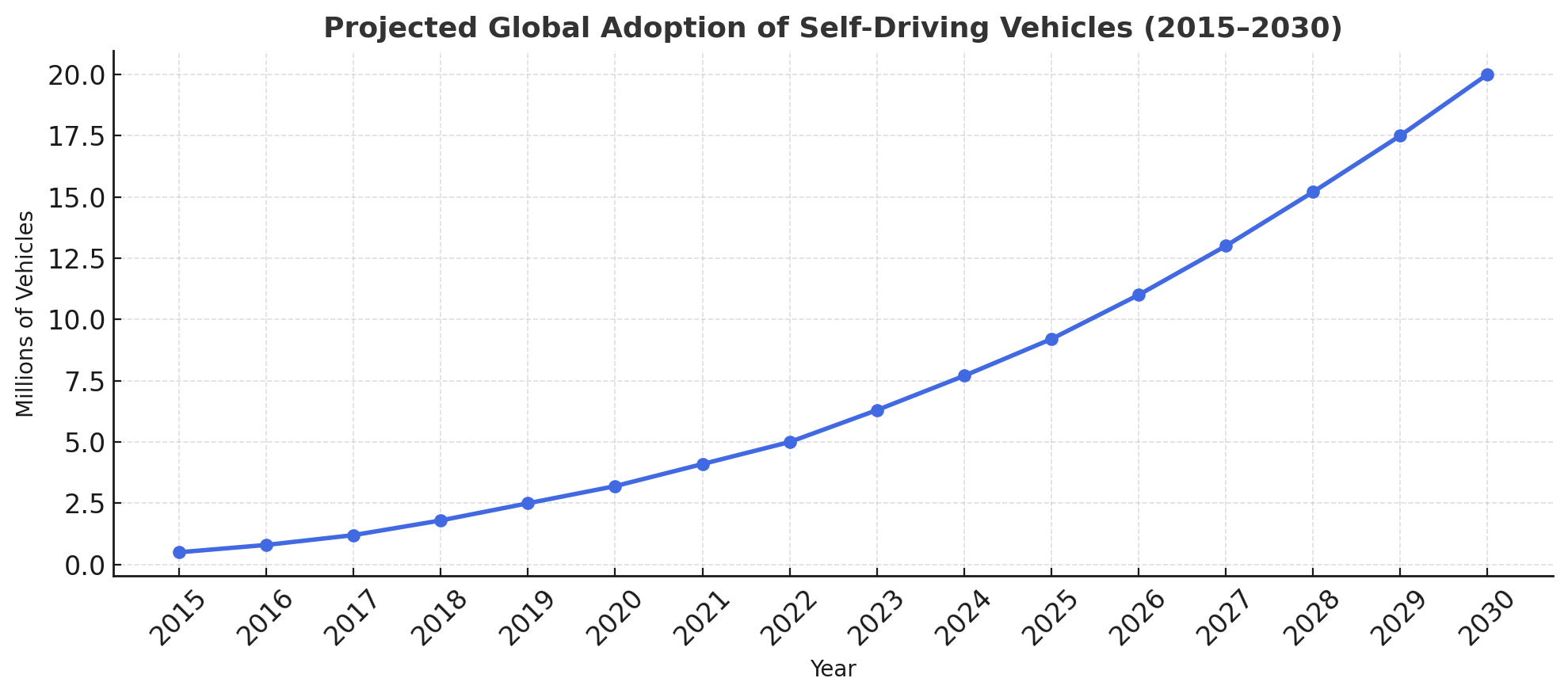
As of 2025, Level 2 and early Level 3 systems dominate. Tesla’s Autopilot and GM’s Super Cruise are examples. Level 4 is just starting to emerge in robo-taxi pilots in cities like Phoenix and San Francisco.
⚙️ Who’s Driving the Revolution?
Major players include:
-
Waymo (Alphabet): Operating Level 4 robotaxis in Phoenix
-
Tesla: Level 2 with “Full Self Driving” beta; Level 3 ambitions
-
Cruise (GM): Active autonomous taxi pilot in multiple cities
-
Baidu Apollo (China): Urban AV testing and infrastructure
-
Mobileye (Intel): Building L4-ready platforms for OEMs
Alongside them, dozens of startups and mobility tech providers are reshaping the supply chain—from LIDAR sensors to edge computing chips.
🌍 Industries Being Transformed
Self-driving vehicles are about more than commuting. They’re disrupting:
-
Logistics: Autonomous delivery fleets, long-haul trucking
-
Public Transit: On-demand autonomous shuttles for last-mile travel
-
Emergency Services: Faster, safer autonomous responders
-
Agriculture & Mining: AVs for controlled, repetitive environments
-
Insurance: Shifting risk from drivers to manufacturers and coders
⚠️ Challenges: Still a Bumpy Road
Despite headlines, full autonomy is not yet ready for general release. Major hurdles include:
-
Edge case handling: Construction zones, snow, erratic humans
-
Urban unpredictability: Bikes, jaywalkers, chaotic intersections
-
Liability laws: Who’s at fault when the “driver” is a server?
-
Moral decisions: The trolley problem, but in traffic
-
Sensor limits: LIDAR, radar, and camera fusion still struggle in extreme conditions
🧾 Conclusion: Turning the Corner
We’re not yet in a world where you can nap from New York to Boston in the backseat of a car with no driver. But we're inching toward it. Self-driving cars today are situational experts—increasingly capable in specific environments, but not universally autonomous.
The next decade will be decisive. It will test our technology, our infrastructure, and our values. And it will force us to ask: Are we passengers in the journey of AI—or its co-pilots?
📰 Recent Highlights & Shifts
-
Tesla got permission in Arizona to test robotaxis (with safety monitors still in place) in the Phoenix metro area.
-
Waymo is expanding its robotaxi service into Nashville, including a partnership with Lyft to scale its reach.
-
Amazon’s Zoox launched a fully autonomous ride-hailing service in Las Vegas, using vehicles built from the ground up as robotaxis (no steering wheel).
-
Bot Auto ran a 40-mile Level 4 truck run in Texas without a human in the vehicle — hub-to-hub on highways and local roads.
-
Nissan is testing a new driver assistance system (Level 2) in Tokyo in collaboration with UK startup Wayve — a step toward smarter urban driving support.
-
Legislation is accelerating: 25 U.S. states introduced 67 bills in 2025 concerning autonomous vehicles, covering liability, road testing, and definitions.
🧠 My Take: Where We’re Actually Headed
Reading between the lines and watching how tech, regulation, and public trust are evolving, here’s where I believe we’re going — and what worries me.
-
We are not close to Level 5 mainstream driving. The gap between “works in structured zones or highways” and “works everywhere, always” is still massive.
-
The next decade will see selective Level 4 deployment (robotaxis, shuttles, logistics) in constrained environments (city centers, campuses, highways).
-
I think autonomous trucking and logistics may lead the way, because those environments are more controlled and the cost savings are huge. The Bot Auto run in Texas is a strong signal.
-
Meanwhile, most consumer vehicles will be “smart-assist” cars (Level 2 or 3) for a long time. People will increasingly expect safety, lane-keeping, and partial autonomy, but still carry responsibility.
-
The regulatory and legislative battle is going to be messy. Who’s liable? What safety benchmarks? How do we certify AI systems that continually learn on the roads? If regulation lags or is fragmented, we’ll see slower, uneven adoption.
-
Public trust is fragile. Missteps, accidents, overhyping promises — those will slow adoption more than technical limits.
✅ Conclusion
Autonomous vehicles are no longer fantasy — they’re arriving in patches and pilots. But the leap from “robotaxi in Vegas” to “everyone’s car is driverless” is still a long one. In my view, we’ll see gradual, regional rollouts in the next 10 years, but a fully autonomous world won’t emerge overnight.